
The latest civil construction market outlook reveals a shift in industry confidence. Heavy civil construction executives are increasingly optimistic about moderate growth, even as expectations for strong growth have declined. Rising costs, labor shortages, interest rates, and uncertainty surrounding federal infrastructure spending continue to influence how industry leaders view the next four quarters.
Heavy Civil Resource Consultants (HCRC) recently surveyed construction executives to understand their expectations for the civil construction market. Comparing Q3 2026 results with Q2 2026 and Q3 2025 reveals several important trends that contractors, hiring managers, and construction professionals should watch.
Q3 2026 Civil Construction Market Outlook: Poll Results
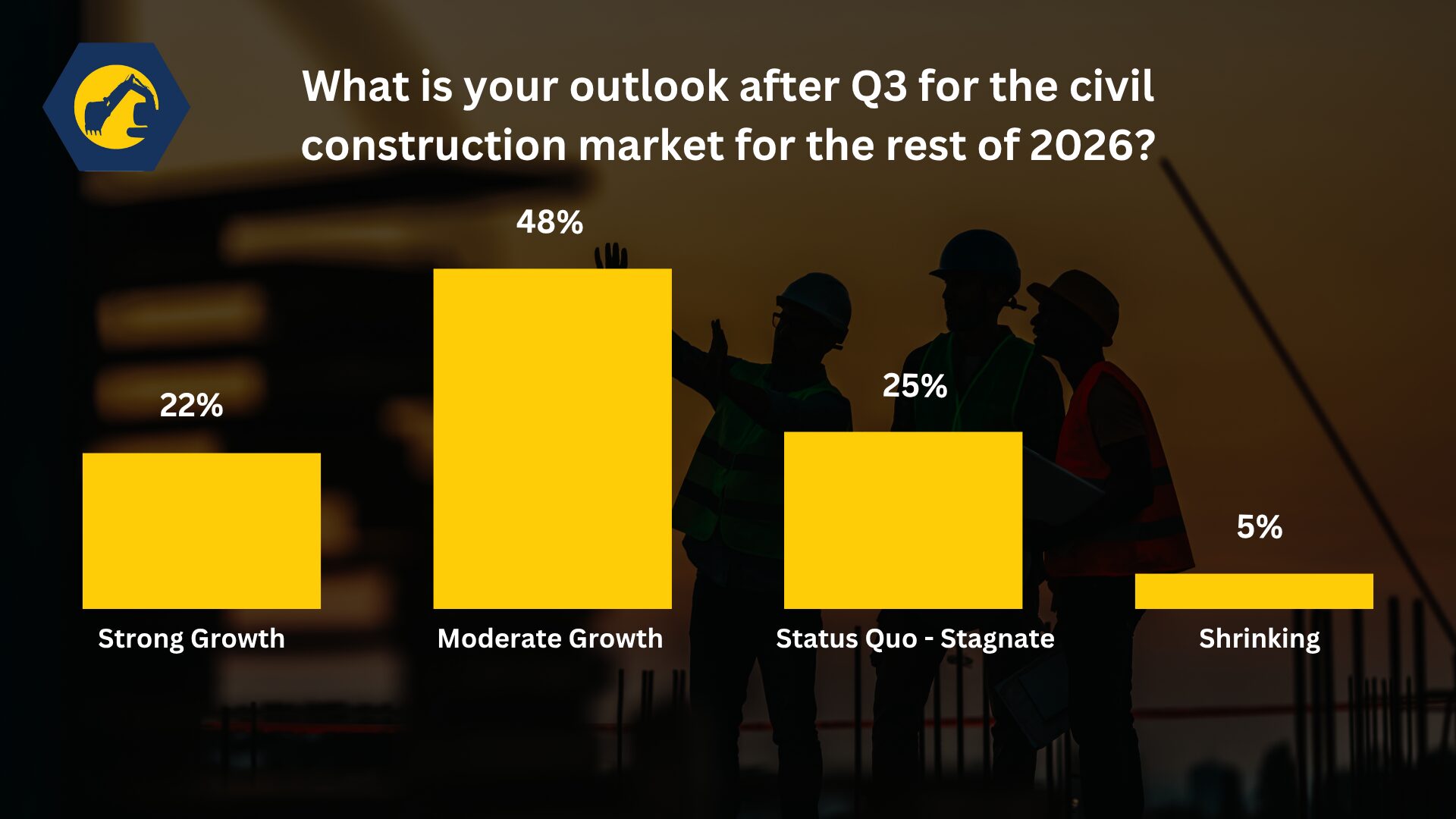
In the third quarter of 2026, executives reported the following expectations for the next four quarters:
- Strong growth: 22%
- Moderate growth: 48%
- Status quo or stagnation: 25%
- Shrinking market: 5%
The results indicate that 70% of respondents anticipate some level of growth. Although most expect moderate rather than strong expansion, the relatively small percentage predicting a shrinking market suggests that outright pessimism has eased.
For contractors, this outlook points toward continued opportunities in infrastructure construction, transportation, bridges, highways, water systems, and utilities. However, opportunities may vary depending on geographic markets, project funding, and the timing of contract awards.
Comparing Q3 2026 With Previous Construction Market Trends
The civil construction market outlook has changed considerably since the second quarter.
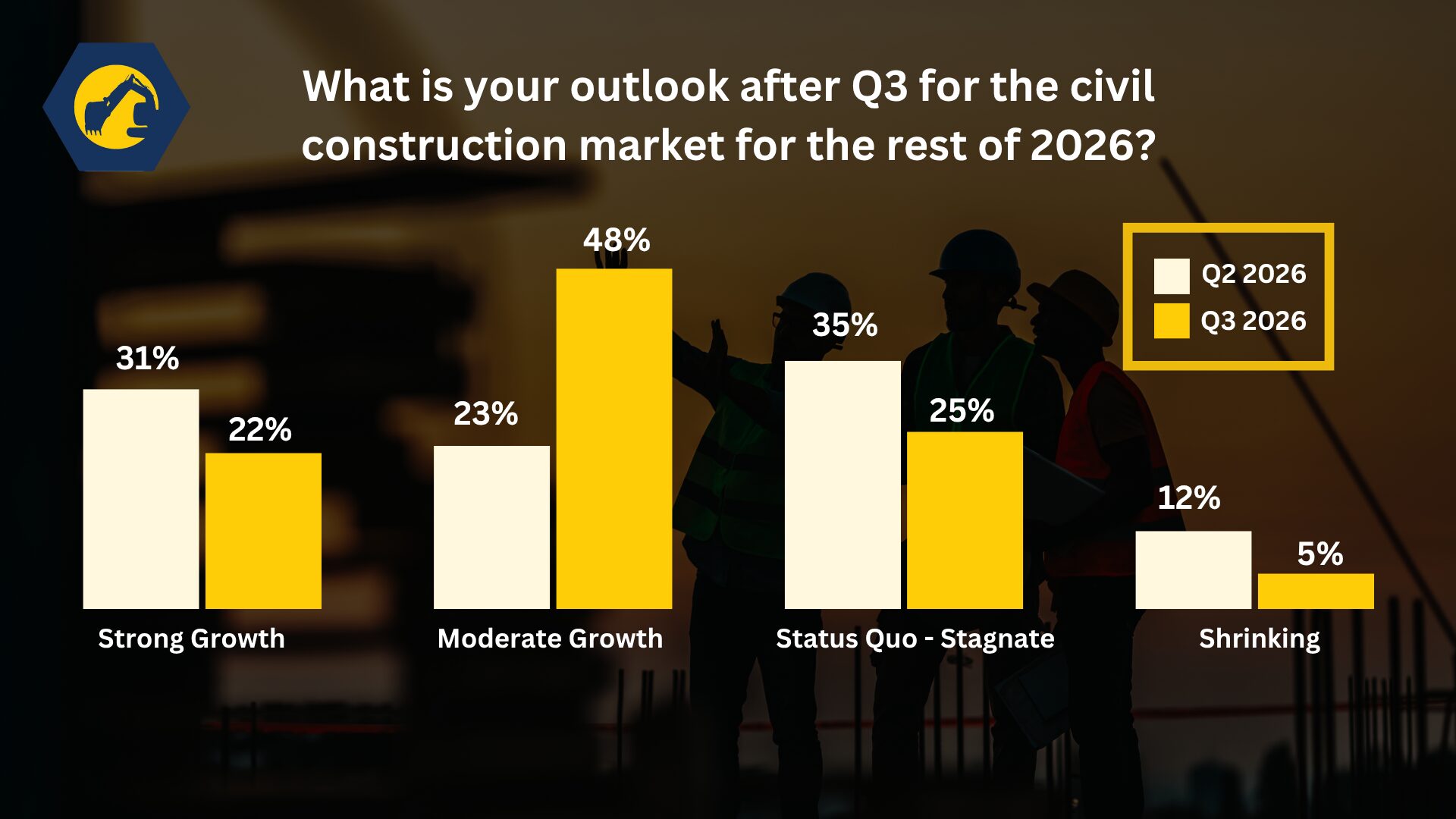
In Q2 2026, 31% of executives expected strong growth, 23% anticipated moderate growth, 35% expected stagnation, and 12% predicted a shrinking market.
By Q3, moderate-growth expectations had increased by 25 percentage points, while strong-growth expectations declined by nine points. Meanwhile, stagnation fell by 10 points, and expectations of market contraction dropped by seven points.
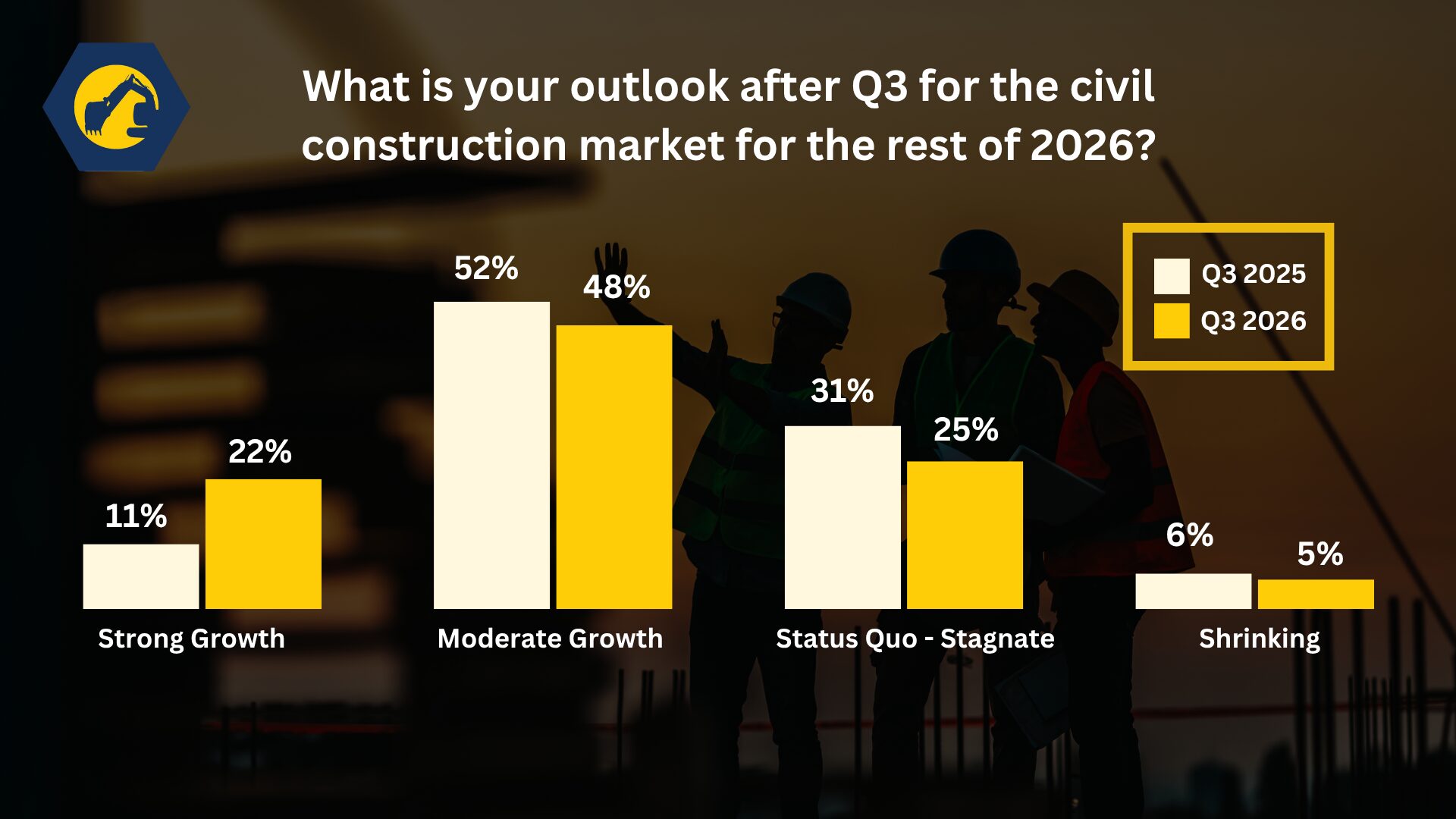
Compared with Q3 2025, strong-growth expectations doubled from 11% to 22%. Moderate growth declined slightly from 52% to 48%, while stagnation improved from 31% to 25%.
Combined, expectations for strong or moderate growth increased from 54% in Q2 2026 to 70% in Q3. These figures suggest that confidence has shifted toward steady expansion rather than rapid acceleration.
What Is Influencing the Heavy Civil Construction Market?
Several economic and industry factors could explain these changes in sentiment.
Infrastructure Spending and Project Funding
Federal and state infrastructure programs continue to influence demand for transportation, bridge, highway, and utility construction. However, funding availability, procurement schedules, and contract awards determine how quickly planned projects become active construction work.
Contractors should monitor upcoming public projects and evaluate their backlogs carefully rather than assume that anticipated infrastructure spending will immediately translate into revenue.
Inflation, Interest Rates, and Construction Costs
Inflation and borrowing costs remain important considerations for contractors. Higher interest rates can affect private development, equipment financing, and project economics. Meanwhile, fuel, materials, and aggregate production expenses can reduce profit margins.
These pressures may encourage executives to anticipate moderate growth while remaining cautious about expanding operations too aggressively.
Skilled Labor Shortages and Rising Salaries
Workforce availability remains another major concern. Experienced project managers, superintendents, estimators, and skilled field personnel are essential to completing projects successfully.
Competition for these professionals can drive compensation higher, increasing labor costs for contractors. Even companies with strong backlogs may struggle to capitalize on new opportunities if they cannot recruit and retain qualified employees.
For this reason, strategic workforce planning and effective recruitment will remain important as contractors prepare for potential growth.
Politics and Federal Infrastructure Investment
The political environment may also influence the civil construction market outlook heading into the 2026 midterm elections.
Changes in congressional control, federal spending priorities, and infrastructure policy could affect how contractors evaluate future opportunities. Existing infrastructure programs may continue supporting certain projects, but uncertainty surrounding future funding and policy direction can complicate long-term planning.
The extent to which political changes influence construction activity will depend on actual legislation, funding decisions, and project implementation. Contractors should distinguish between campaign promises and confirmed spending commitments when developing their forecasts.
What the Q3 Results Mean for Construction Executives
Overall, the latest civil construction market outlook points toward cautious optimism. Fewer executives expect stagnation or contraction, and more anticipate moderate growth over the next four quarters.
However, improving sentiment does not automatically guarantee stronger margins, expanding backlogs, or easier hiring. Contractors must continue managing project costs, monitoring funding opportunities, and addressing workforce shortages.
For hiring managers, this environment reinforces the importance of identifying qualified construction professionals before staffing gaps limit the ability to pursue new projects.
What is your outlook for the civil construction market over the next four quarters? Are you seeing increased project opportunities, or are rising costs and labor shortages holding your business back?
Share your perspective in the comments and join the conversation with Heavy Civil Resource Consultants.