
Choosing a career path in heavy civil construction can be challenging, especially when deciding between estimating and project management. Both roles are essential to successful infrastructure projects, but they offer very different experiences, responsibilities, and career opportunities. Understanding the differences can help you determine which path aligns best with your strengths and long-term goals.
Understanding Estimating Careers in Heavy Civil Construction
Estimators are responsible for determining the cost of a project before construction begins. They review drawings and specifications, perform quantity takeoffs, gather subcontractor pricing, and prepare competitive bids.
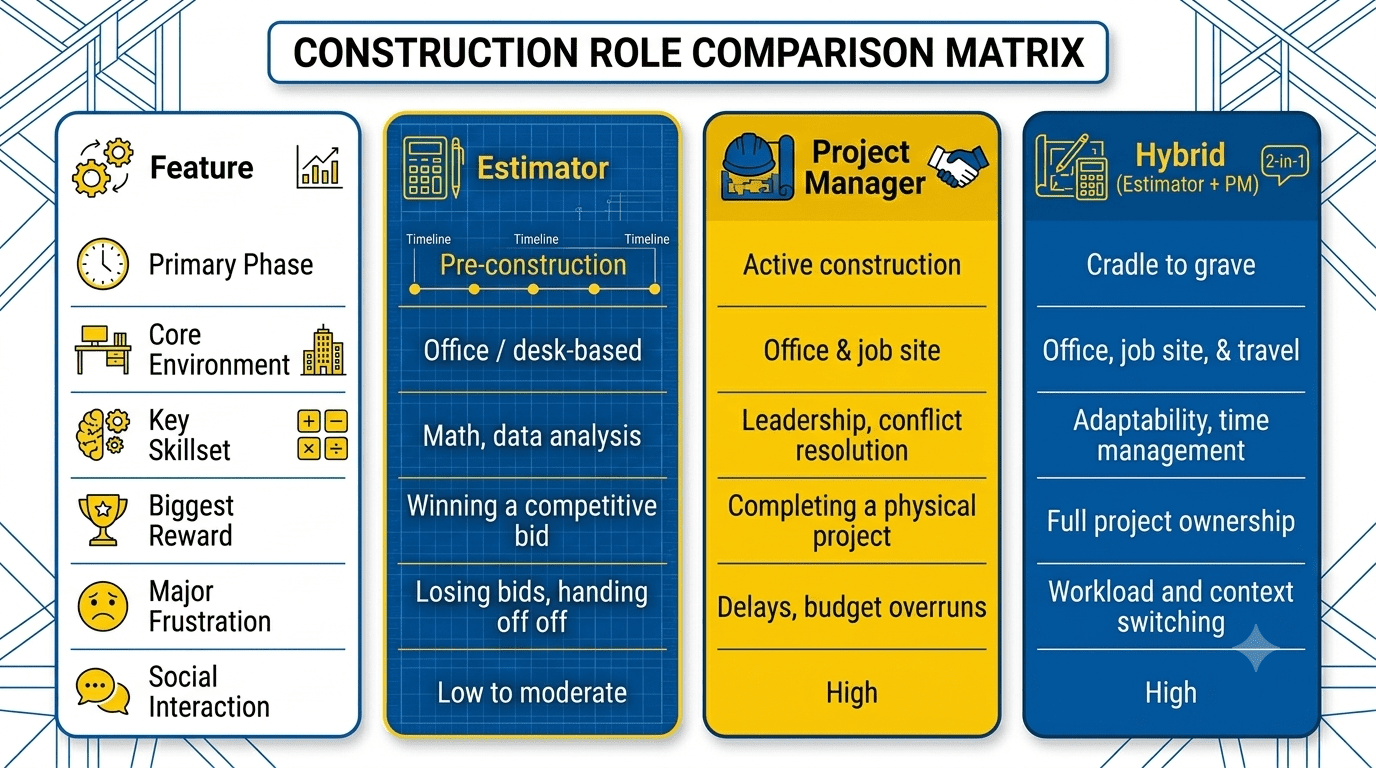
One of the biggest advantages of estimating is the structured work environment. Most estimators work in an office setting with relatively predictable schedules and limited travel requirements. The role also provides exposure to a wide variety of projects, from highways and bridges to utility and earthwork projects.
For professionals who enjoy analyzing data, solving problems, and working with numbers, estimating can be highly rewarding. However, one drawback is that many projects being bid may never be awarded. Even when a bid is successful, the estimator often hands the project over to the operations team and may not see the project reach completion.
Advantages and Challenges of Construction Project Management
Project managers oversee construction projects from award to completion. They are responsible for budgets, schedules, subcontractor coordination, client communication, and resolving issues that arise throughout the project lifecycle.
A major benefit of project management is the opportunity to see projects come to life. Watching roads, bridges, and infrastructure projects progress from plans on paper to completed facilities can be incredibly satisfying.
This career path also appeals to professionals who enjoy leadership, communication, and making decisions in a fast-paced environment. However, project management comes with significant responsibilities. Delays, budget concerns, changing client expectations, and unforeseen field conditions often place project managers under considerable pressure.
The Hybrid Role: Estimating and Managing Projects
Many smaller contractors combine estimating and project management into one position. This hybrid approach allows professionals to estimate projects, secure work, and then manage the construction process through completion.
The primary advantage of this arrangement is ownership. Professionals gain a comprehensive understanding of both preconstruction and operations while developing a broad skill set that can accelerate career growth.
The challenge, however, is workload. Switching between preparing bids and managing active construction projects requires strong organizational skills and the ability to balance competing priorities.
How to Choose the Right Heavy Civil Construction Career Path
When evaluating estimating vs project management in heavy civil construction, consider your personality, strengths, and career goals.
If you prefer working with numbers, analysis, and a structured office environment, estimating may be the right fit. The role generally provides stable schedules and less travel, which can contribute to a better work-life balance.
If you thrive on leadership, communication, and solving problems in dynamic environments, project management may be a better match. The opportunity to oversee projects from beginning to end can be both professionally challenging and personally rewarding.
Ultimately, there is no wrong choice. Both career paths play critical roles in delivering successful infrastructure projects and offer excellent long-term opportunities within the heavy civil construction industry.